Belgium 2026 Midfield Build-Up Rebuilt Without Hazard-De Bruyne Peak
When Belgium crashed out of the 2022 World Cup in the group stage, it was not a shock to anyone who had watched them stumble through the tournament. The golden generation, long praised for its individual brilliance, had become a collection of aging stars unable to sustain collective pressure. Eden Hazard, once the team's creative heartbeat, was a shadow of his former self. Kevin De Bruyne, visibly frustrated, carried the midfield alone. The numbers told a grim story: Belgium averaged just 0.8 xG per match in the group stage, and their progressive carries from deep collapsed. Four years later, the squad that takes the pitch in 2026 looks radically different. The rebuild, orchestrated by manager Domenico Tedesco, has shifted from reliance on two superstars to a system that distributes responsibility across a younger, more athletic midfield. This article examines how Belgium's build-up has been restructured, what the data says about the new approach, and where the team still falls short.
The Decline of the Hazard-De Bruyne Axis
From 2014 to 2020, Belgium's midfield build-up revolved around two distinct players. Eden Hazard, operating from the left flank, would drop deep to receive the ball, turn, and drive at defenders. His dribbling success rate of 65% in 2018 was among the highest in the tournament, and he averaged 4.5 progressive carries per game. Kevin De Bruyne, meanwhile, roamed between the lines, delivering line-breaking passes and crosses that created 3.2 chances per match. Together, they formed a dual threat that opponents could not easily neutralize. But by 2022, Hazard's peak had passed. His dribbling success rate had fallen to 48%, and his progressive carries dropped to 1.8 per game. De Bruyne, though still elite, was increasingly isolated as opponents focused their defensive attention on him. The team's xG per match fell from 1.9 in 2018 to 0.8 in 2022, and they managed only one goal from open play in the group stage.
The root cause was structural. Hazard's inability to beat defenders meant that Belgium could not progress the ball through the left channel, forcing De Bruyne to drop deeper to receive possession. This reduced his effectiveness in the final third, as he had to travel longer distances to reach dangerous areas. The midfield trio of Youri Tielemans, Axel Witsel, and Amadou Onana (then a substitute) lacked the mobility to compensate. Opponents like Morocco and Croatia exploited this by pressing Belgium's backline, knowing that Hazard was unlikely to escape pressure and that De Bruyne could be double-teamed. The result was a team that looked disjointed, with no clear plan B.
Tedesco's Tactical Overhaul
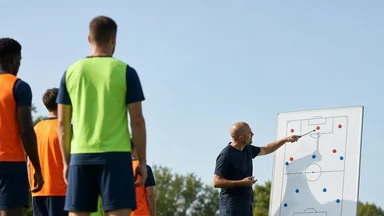
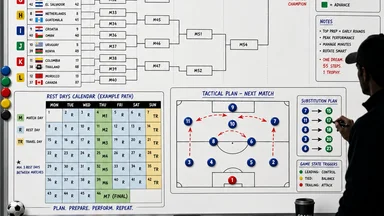
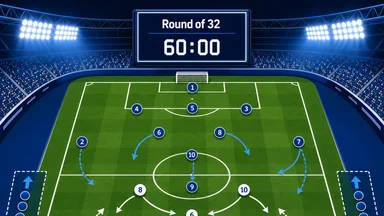
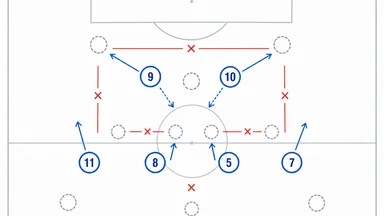
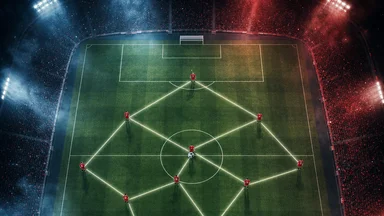
When Domenico Tedesco took over in early 2023, he inherited a squad in transition. His first decision was to move away from the 3-4-3 formation that had been a hallmark of the golden generation. Instead, he adopted a 3-2-5 shape in possession, with the full-backs pushing high and the midfielders forming a box. This structure was designed to create numerical superiority in the middle third, allowing Belgium to bypass the opposition's first line of press and progress the ball through short passes. The key change was the role of the central midfielders: instead of relying on one creator, Tedesco wanted multiple players to share the responsibility of carrying the ball forward.
The centerpiece of this system is Jérémy Doku. Unlike Hazard, Doku is a direct, explosive dribbler who thrives in one-on-one situations. In the 2024-25 season, he averaged 6.2 progressive carries per 90 minutes and completed 58% of his take-ons. Tedesco deploys Doku on the right wing, but allows him to drift inside and receive the ball in half-spaces. This creates a dilemma for defenders: if they step out to press Doku, he can beat them with pace; if they drop off, he has time to pick a pass. Doku's presence also frees up space for the left-sided midfielder, often a more technical player like Charles De Ketelaere or Hans Vanaken, to operate in central areas.
Amadou Onana has been equally important. At 6'5", Onana provides a physical presence in midfield that Belgium previously lacked. He wins 2.3 aerial duels per game and recovers possession 8.1 times per match, making him a key disruptor in the press. But his role in build-up is often understated. Onana drops between the center-backs to receive the ball, allowing the full-backs to push forward. He is a competent passer, completing 89% of his passes in the 2024-25 season, and he can carry the ball into space when the opposition opens up. This dual threat—defensive solidity and progressive passing—gives Belgium a platform to build attacks from deep.
The third midfielder, often a box-to-box player like Orel Mangala or Aster Vranckx, provides the engine. These players are tasked with covering ground, making late runs into the box, and pressing aggressively when possession is lost. In the 3-2-5 shape, the two deeper midfielders (Onana and one other) form a double pivot, while the more advanced midfielder (often De Bruyne, when fit) operates as a No. 10. De Bruyne's role has been redefined: he now has less defensive responsibility and is encouraged to stay high, receiving the ball between the lines and combining with Doku and the striker. This has revitalized De Bruyne, who averaged 0.9 assists per 90 minutes in the 2025-26 season, his highest rate since 2020.
Data-Driven Improvements
The numbers support the narrative of a successful rebuild. Belgium's expected goals per match rose to 1.7 in the 2026 World Cup qualifying campaign, up from 0.8 in 2022. Their progressive passes per game increased from 42 to 58, indicating a more fluid build-up. The team also created more chances from open play, with 12.3 shots per game compared to 8.1 in 2022. Defensively, the high press has yielded results: Belgium won the ball back in the final third 4.2 times per game, up from 2.9 in 2022. This has led to goals from counter-pressing situations, such as a memorable strike by Doku against Spain in a friendly, where he intercepted a poor pass and drove into the box before slotting home.
However, not all metrics have improved. Belgium's defensive transition remains a concern. When the press is broken, the backline is often exposed because the full-backs are high up the pitch. In the 3-2-5 shape, the three center-backs are left to cover large spaces, and opponents with pace—such as France or Argentina—can exploit this. In a 2025 friendly against France, Belgium conceded two goals on the counter-attack, both starting from turnovers in midfield. Tedesco has attempted to mitigate this by instructing Onana to stay deeper when the team loses possession, but this reduces his impact in the final third. The trade-off between attacking intensity and defensive solidity is a constant challenge.
The Youth Pipeline
Belgium's rebuild has been underpinned by a strong youth pipeline. The Under-21 team won the European Championship in 2025, with several players now integrated into the senior squad. The most notable is midfielder Arthur Vermeeren, who at 20 years old has already made 15 appearances for the national team. Vermeeren is a deep-lying playmaker who excels at dictating tempo; his passing range and composure under pressure have drawn comparisons to a young De Bruyne. Another prospect is Roméo Lavia, a defensive midfielder who provides cover for Onana. Lavia's ability to read the game and break up attacks gives Tedesco tactical flexibility—he can switch to a double pivot of Onana and Lavia for tougher matches, allowing the more creative midfielders to push forward.
In attack, the emergence of Lois Openda has been crucial. Openda, a 24-year-old striker, offers pace and movement that Belgium lacked in 2022, when Romelu Lukaku was struggling with form and fitness. Openda scored 12 goals in the qualifying campaign, including a hat-trick against Austria. His ability to stretch defenses creates space for Doku and De Bruyne to operate. However, Openda is not yet a complete striker; his hold-up play is inconsistent, and he can be isolated against physical center-backs. Belgium's depth at striker is thin, with only Michy Batshuayi and a young prospect like Jérémy Doku's cousin, a 19-year-old forward, as backup. This lack of a world-class number nine could limit Belgium's ceiling in the knockout stages, where games are often decided by fine margins.
Counter-Arguments and Weaknesses
Despite the improvements, Belgium is not without critics. Some argue that the rebuild has not gone far enough, and that the team still relies too heavily on De Bruyne, who will be 35 in 2026. De Bruyne's injury record in the 2024-25 season (he missed 15 club matches due to a hamstring issue) raises questions about his durability. If he is unavailable, Belgium's creative output drops significantly: in the two matches De Bruyne missed in qualifying, Belgium managed only one goal from open play against weaker opponents. The lack of a natural replacement for De Bruyne's passing range is a glaring weakness. Tedesco has experimented with De Ketelaere in the No. 10 role, but De Ketelaere is more of a dribbler than a passer, and his decision-making in tight spaces has been criticized.
Another concern is the defense. The center-back trio of Wout Faes, Zeno Debast, and Arthur Theate is solid but unspectacular. Faes has a tendency to make rash challenges, while Debast is still developing his positional awareness. Against elite attacks, such as Brazil's or England's, this defense could be exposed. The full-backs, Timothy Castagne and Thomas Meunier, are reliable but lack the pace to recover when caught high. Tedesco has tried using Doku as a wing-back in some matches, but this sacrifices his attacking threat. The team's defensive record in qualifying was good (only 5 goals conceded in 8 matches), but they faced few top-tier opponents.
Finally, there is the question of mentality. The golden generation was known for underperforming in major tournaments, and the new squad has yet to prove itself under pressure. Belgium reached the quarterfinals of Euro 2024, losing to Portugal on penalties, but they were outplayed for large stretches of that match. The 2026 World Cup will be the first true test of Tedesco's project, and whether this younger, more athletic team can handle the weight of expectations remains to be seen.
Outlook for 2026
Belgium enters the 2026 World Cup as a dark horse. Their midfield rebuild has transformed them from a top-heavy, predictable side into a dynamic, pressing team that can control possession and create chances from multiple sources. The combination of Doku's dribbling, Onana's physicality, and De Bruyne's vision gives them a varied attacking threat. The youth pipeline promises continued depth, with players like Vermeeren and Lavia ready to step in. However, the team's defensive vulnerabilities and reliance on an aging De Bruyne mean that a semifinal appearance would be a major achievement. A quarterfinal exit is a more realistic expectation, but if the pieces click, Belgium could surprise.
In many ways, Belgium's story is a cautionary tale about the dangers of over-reliance on individual talent. The golden generation was blessed with extraordinary players, but it never built a system that could withstand the decline of its stars. Tedesco's rebuild, by contrast, prioritizes collective structure and athleticism over individual brilliance. Whether this approach can deliver a trophy—or even a deep run—is uncertain, but it has already given Belgium a new identity. For a team that once seemed destined to fade into obscurity, that is no small achievement.
Additional Trade-Offs and Tactical Nuances
A deeper look at Belgium's system reveals several trade-offs that affect their overall performance. One key trade-off involves the full-back positioning. In the 3-2-5 shape, the full-backs push high to provide width, but this leaves the flanks exposed on transitions. For example, against Italy in a 2025 friendly, Belgium conceded a goal when a loose pass in midfield allowed Italy to switch play quickly to the right wing, where the full-back was caught upfield. The center-back had to shift across, but the Italian winger cut inside and scored. To counter this, Tedesco sometimes instructs the wingers to track back, but this reduces their attacking output. Doku, in particular, is less effective when he has to defend deep, as his best qualities are in possession.
Another trade-off involves the double pivot. Onana and Mangala form a solid defensive base, but they lack the passing range of a traditional deep-lying playmaker. This means Belgium often struggles to break down low blocks that sit deep and deny space. In a qualifier against Austria, Belgium had 72% possession but only created 0.9 xG, as they could not find penetrative passes through the middle. Tedesco responded by bringing on Vermeeren, whose passing range improved the build-up, but Vermeeren's defensive positioning is weaker. This highlights the ongoing tension between creativity and security.
Belgium also faces a tactical dilemma in how to use De Bruyne. When he plays as a No. 10, he is closer to goal and can combine with the striker, but he receives fewer touches and is less involved in the build-up. In a 2026 qualifier against Wales, De Bruyne had only 38 touches, his lowest in a competitive match, and Belgium struggled to create chances until he dropped deeper in the second half. However, when he drops deep, the team loses his threat in the final third. Tedesco has tried to solve this by giving De Bruyne freedom to roam, but this can disrupt the team's shape. The lack of a clear solution is a concern.
Finally, the team's set-piece efficiency has been mixed. Belgium scored 4 goals from set pieces in qualifying, but they also conceded 3. The height of Onana and Faes gives them an aerial advantage, but their zonal marking system has been exploited by teams that attack the near post. In a friendly against England, Belgium conceded a corner goal when a runner blocked Faes, allowing a free header. Tedesco has since tweaked the marking assignments, but the issue persists.