Set-Piece Specialists Emerge as 2026 World Cup Knockout Deciders
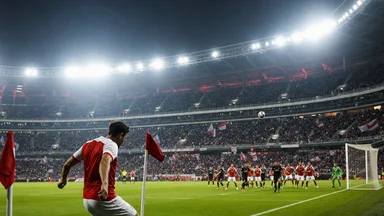
Knockout football at a World Cup is often a game of fine margins. In the 2022 tournament, roughly a third of all goals in the knockout stage came from set pieces—corners, free kicks, and penalties. That share has been steadily rising, and with the 2026 World Cup expanding to 48 teams, the congestion of knockout fixtures will place even greater emphasis on efficiency in dead-ball situations. Dedicated set-piece coaches, once a novelty, are now permanent fixtures in most top national team staffs. Their work, often invisible during open play, could decide which nations advance in North America.
Set-Piece Coaches Are Now the X-Factor
It was England's run to the 2018 semifinals that first brought widespread attention to the role of a specialist set-piece coach. Under Gareth Southgate, the team scored a record number of set-piece goals in a single World Cup, with eight from corners and free kicks. That success was largely attributed to the work of Allan Russell, then a set-piece coach. Since then, the trend has accelerated. Denmark's impressive run to the Euro 2020 semifinals also leaned heavily on rehearsed routines, and by 2022, nearly every major contender had a dedicated set-piece coach.
The logic is straightforward: knockout ties are often decided by a single goal, and set pieces offer a higher probability of scoring than open play. According to data from Opta, the expected goals (xG) per set piece in World Cup knockout matches has increased by roughly 15% since 2018, reflecting both better attacking design and improved delivery. Coaches now spend hours analyzing opponent defensive setups, identifying weak zones, and drilling specific routines.
Norway's set-piece coach Johan Lædre Bjørdal, for instance, has been credited with transforming the team's efficiency from corners. Under his guidance, Norway scored a remarkable 11 set-piece goals in 10 qualifying matches for Euro 2024. Bjørdal's methods involve detailed video analysis and player-specific roles, such as using tall defenders to block the goalkeeper's view while a shorter player attacks the near post. This kind of specialization is becoming the norm.
The pressure on these coaches will be immense in 2026. With more teams than ever, the knockout rounds will feature unfamiliar opponents and limited preparation time. A well-drilled set-piece routine can be the difference between advancing and elimination.
However, some critics argue that over-reliance on set pieces can stifle creative open-play football. For instance, teams that invest heavily in dead-ball drills may neglect fluid attacking patterns, becoming predictable in open play. A counter-argument is that set-piece efficiency does not have to come at the expense of open-play quality; the best teams, like Brazil in 2002, combined both. The 2026 tournament will test whether specialization can coexist with flair.
How Data Analytics Reshaped Set-Piece Strategy
The rise of set-piece specialists is inseparable from the broader adoption of data analytics in football. Clubs like Brentford in England's Premier League pioneered the use of data to design set-piece routines, employing a full-time analyst to track every dead ball in training and matches. Brentford's approach has been widely studied; they treat corners almost like basketball plays, with specific movements and timing.
National teams have followed suit. Germany, for example, employs a data analyst who produces detailed reports on opponents' defensive setups from corners and free kicks. The analyst identifies patterns—such as which defender tends to switch off or which zone is left unguarded—and the set-piece coach designs routines to exploit those weaknesses. This is not guesswork; it is evidence-based planning.
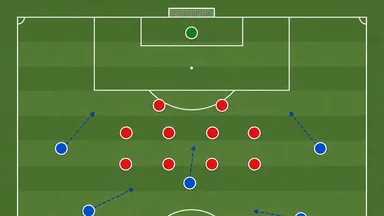
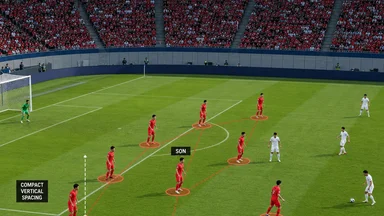
One key debate is between zonal and man-marking defensive systems on set pieces. Zonal marking, where defenders guard specific areas rather than individual attackers, has become more common because it reduces the risk of being dragged out of position. However, it can be exploited by well-designed attacking routines that overload a zone. The data shows that teams using zonal marking concede slightly fewer goals overall, but they are more vulnerable to well-rehearsed, multi-stage attacks. For example, in the 2022 World Cup, teams that used zonal marking conceded an average of 0.18 goals per corner, compared to 0.21 for man-marking teams, but they also allowed more dangerous second-phase opportunities.
Short corners and flick-ons have also increased in frequency, as they create chaos in the box and make it harder for defenders to track runners. According to a study by the CIES Football Observatory, the proportion of short corners in top European leagues rose from about 12% in 2018 to nearly 20% by 2024. This trend is likely to continue at the World Cup, where set-piece specialists will have had months to prepare specific routines. Another emerging trend is the use of dummy runners to confuse defenders, a tactic perfected by teams like Liverpool in the Premier League.
Data analytics also plays a role in defensive preparation. Teams now use heat maps to identify which areas of the goal are most vulnerable from free kicks, and they position their wall accordingly. Goalkeepers study opponents' penalty-taking tendencies to gain an edge. The integration of data into every aspect of set pieces is a hallmark of modern football.
The Tactical Arms Race: Attacking vs Defending
As attacking set-piece designs become more sophisticated, defensive strategies have evolved in response. Germany, for example, uses near-post runners on corners specifically to block the goalkeeper's movement and vision, making it harder for him to claim crosses. This tactic, sometimes called a "pick play" in American sports, is controversial but effective. France, meanwhile, practices low-driven corners that skim across the ground, bypassing tall defenders and aiming for a runner at the far post.
Brazil, known for its flair in open play, has also invested heavily in set-piece variety. Under manager Tite, the team trained three distinct routines for each match: one for the first corner, one for a second-phase attack, and one for a short option. This multiplicity makes it difficult for opponents to prepare. The Brazilian set-piece coach, who works closely with the analysts, adjusts the routines based on the opponent's defensive tendencies.
Defensive training has also intensified. Teams now drill reactions to second balls—the loose ball after an initial clearance—because many set-piece goals come from rebounds. Video review sessions focus on identifying opponent weak spots, such as a defender who tends to drop his eyes or a goalkeeper who stays on his line. The arms race extends to the touchline: coaches signal specific routines from the sideline, sometimes using coded gestures to avoid detection.
This tactical battle is not just about scoring; it is also about preventing goals. In the 2022 World Cup, Argentina's defensive organization on corners was a key factor in their run to the final. They conceded only one set-piece goal in the entire tournament, a testament to their disciplined approach. However, this defensive solidity came at a cost: Argentina's focus on set-piece defense may have limited their attacking transitions, as players were often positioned deep to protect against counter-attacks from cleared corners.
A trade-off exists between committing numbers forward on attacking set pieces and maintaining defensive balance. Teams like the Netherlands in 2022 often left only two players back, risking fast breaks if the set piece was cleared. In contrast, more cautious teams like Morocco kept four players back, reducing scoring chances but ensuring defensive stability. The optimal balance depends on the game state and opponent.
Case Study: Argentina's 2022 Set-Piece Success
Argentina's 2022 World Cup triumph was built on a foundation of set-piece efficiency. They scored four set-piece goals in the knockout stage alone, including a crucial corner in the quarterfinal against the Netherlands and a well-worked free kick in the semifinal. The architect was Lionel Scaloni's coaching staff, which included a dedicated set-piece coach who had studied opponents for months.
Ángel Di María's delivery was instrumental. His ability to bend the ball into dangerous areas, combined with precise movement from forwards like Julián Álvarez and Lautaro Martínez, created constant threats. In the final against France, Argentina's opening goal came from a penalty, but their defensive discipline on corners limited France's chances. France, a team known for its aerial prowess, managed only two clear headers on goal from set pieces in the entire match.
Scaloni's approach was methodical. He used training sessions to simulate game situations, with specific routines for each phase of play. The coaching staff also tracked data on opponent tendencies, such as which defender was weakest in the air or which goalkeeper was slow to react. This preparation paid off repeatedly.
For 2026 contenders, Argentina's model is instructive. It shows that set-piece success requires not just a coach but an integrated system: data analysis, player buy-in, and constant rehearsal. Teams that neglect this aspect will be at a disadvantage. However, replicating Argentina's success is not straightforward; it requires players who can execute under pressure and a coach who can adapt routines to different opponents. Some teams may lack the technical quality to deliver precise crosses or the aerial strength to win headers.
Emerging Specialists to Watch at 2026
Several national teams have invested heavily in set-piece expertise ahead of 2026. Norway's Johan Lædre Bjørdal is one to watch; his work with the national team has drawn praise from across Europe. Japan, under Hajime Moriyasu, has adopted a data-driven approach, using tracking data to identify optimal runner positions and delivery angles. Morocco's 2022 run to the semifinals was partly built on set-piece drills, and they have retained their specialist coach.
The United States has also bolstered its analytics team, focusing on dead-ball situations. With the home advantage in 2026, the USMNT aims to turn set pieces into a weapon. Uruguay's Fede Valverde, known for his powerful shot, is a threat from indirect free kicks, and the team has designed routines to maximize his ability.
These specialists are not household names, but their influence is growing. In a tournament where knockout matches often hinge on a single moment, the team that executes a rehearsed corner or free kick with precision can gain a decisive edge. For example, a well-rehearsed short corner routine that ends with a cross to an unmarked header could be the difference between extra time and advancement.
However, the rise of specialists also raises questions about the role of the head coach. Some managers prefer to retain control over set pieces, fearing that delegating to a specialist could undermine their authority. Others embrace specialization as a way to gain a competitive advantage. The trend suggests that the latter approach is winning out, but the tension remains.
Practical Takeaways for Coaches and Analysts
For coaches preparing for the 2026 World Cup, the message is clear: invest in a dedicated set-piece analyst before the tournament. The margin for error is small, and the payoff from a well-executed routine can be enormous. Training should simulate high-pressure knockout scenarios, with fatigue and noise factored in.
Creating a situational playbook for each opponent is essential. This means not just rehearsing one or two routines but having a library of options for different game states—trailing, leading, or needing a goal late. Tracking data can help identify optimal runner positions, and video review should target opponent weak spots. Defensive set pieces also require practice under fatigue, as concentration tends to drop late in matches.
One practical approach is to use training sessions to test routines against a scout team that mimics the opponent's defensive shape. This allows players to recognize patterns and react instinctively. Some teams even use virtual reality to simulate set-piece scenarios, though this remains rare due to cost and accessibility.
Another key consideration is the psychological aspect. Players must trust the routines and execute them without hesitation. Building this trust requires repetition and positive reinforcement. Coaches should also prepare contingency plans for when the opponent anticipates the routine, as flexibility is crucial.
Ultimately, set-piece specialization is not a shortcut to success; it is a complement to open-play quality. But as the 2026 World Cup approaches, the teams that have invested in this area will have a subtle but significant advantage. The knockout rounds may well be decided by a well-worked corner or a clever free kick, and the specialists behind those moments will finally get the credit they deserve.