Endrick’s Growing Role in Real Madrid Attack Redefines Brazil 2026 Striker Plan
When Endrick came on in the 78th minute against Celta Vigo in late May, the game was still scoreless. Within minutes, he rose above his marker to win a header that forced a sharp save from the goalkeeper. It was not a goal, but it was the kind of moment that has become increasingly common: a young striker entering a tight match and changing its rhythm. For Brazil, watching from thousands of miles away, these cameos are more than just club highlights. They are the foundation of a striker plan for the 2026 World Cup.
Endrick’s Late-Game Impact Shifts Brazil’s Depth Chart
Over the final month of the 2024-25 La Liga season, Endrick made three substitute appearances, each time logging between 12 and 25 minutes. In those brief spells, he recorded two key passes and drew two fouls in dangerous areas. His shot conversion rate for the season sits near 19% in league play, a figure that stands out for a teenager adjusting to a new continent. Carlo Ancelotti has been measured in his praise, but after one such appearance he noted, “He changes matches from the bench.” That is not a throwaway line. For a coach who rarely singles out young players, it signals growing trust.
Meanwhile, Richarlison’s start to the 2026 World Cup qualifying cycle has been uneven. Through the first four matchdays, he managed one goal from open play and was substituted early in two of those games. His hold-up play remains valuable, but Brazil’s attack has occasionally looked static when he operates as a lone target man. Endrick offers a different profile—quicker off the ball, more inclined to drift into half-spaces—and that contrast is becoming harder for Dorival Jr. to ignore. The depth chart is no longer settled at striker.
Why Dorival Jr. Watches Real Madrid’s Bench More Than the XI
Brazil head coach Dorival Jr. has attended three Real Madrid matches since March, according to federation sources. Each time, his focus was not on the starting eleven but on the substitutes’ warm-up. He watched Endrick’s off-ball movement in congested zones, how he timed his runs when defenders tired, and how he positioned himself during defensive transitions. This level of attention is unusual for a player who averages around 20 minutes per appearance, but it reflects a strategic calculation: Brazil need a striker who can operate in the tight spaces that World Cup knockout games often produce.
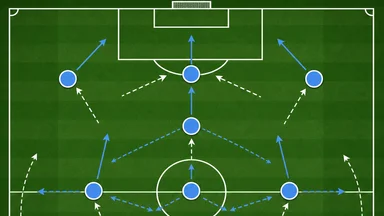
Endrick’s natural role resembles that of a false nine, though he is not a pure playmaker. At 5’9”, he lacks the aerial presence of a traditional target man, yet he won 14 aerial duels in the 2023-24 season—a respectable number for his size. More telling is his willingness to drop deep and link play, a trait that could allow Vinícius Jr. to invert into half-spaces. In that sense, he may be a natural successor to Gabriel Jesus’s role in Brazil’s 2022 setup, but with more direct goal threat.
The Tactical Shift from Target Man to Mobile Poacher
Brazil’s 2022 World Cup attack leaned heavily on physical hold-up play. Richarlison and Pedro both excel at pinning center-backs and bringing wingers into play. That approach worked well in group stages, but in the quarterfinal against Croatia, Brazil struggled to break down a deep block. Endrick’s style offers a different solution. His xG per 90 in La Liga stands around 0.48, comparable to Julián Álvarez at a similar stage of his career. He creates space by drifting wide, forcing defenders to choose between following him and leaving central gaps.
This movement also opens up space for Real Madrid’s midfield runners, and the same principle could apply for Brazil. With Paquetá and Guimarães arriving late in the box, a mobile striker who pulls defenders out of position could be more effective than one who stays central. The shift is not about abandoning the target-man option entirely, but about adding a complementary weapon. Dorival Jr. has used both profiles in friendlies, and the early returns suggest the mobile poacher role suits Brazil’s creative midfielders better.
Endrick’s Development Arc Mirrors Ronaldo Nazário’s 1998 Path
Comparisons to Ronaldo Nazário are inevitable for any Brazilian teenage striker, but the parallels in career trajectory are worth noting. Both debuted for Brazil at 17, then moved to a European giant before turning 18. Ronaldo’s 1997-98 season at Inter Milan, where he scored 34 goals in all competitions, earned him the starting role for the 1998 World Cup. Endrick’s 2025-26 campaign is not at that level—he has 12 goals across all competitions, seven as a substitute—but the pattern of gradual integration is similar.
This is not a direct comparison in terms of output or style. Ronaldo was a phenomenon who broke scoring records. Endrick is still finding his feet. But the developmental path—early international debut, move to a top club, careful integration into the first team—follows a familiar arc. Brazil’s federation has historically been reluctant to start teenagers in World Cups, but the success of Kylian Mbappé in 2018 and Pedri in 2022 has shifted thinking. If Endrick continues to progress, he could become the first Brazilian teenager to start a World Cup match since Ronaldo in 1998.
How Real Madrid’s System Accelerates His Readiness for 2026
Training alongside Jude Bellingham and Kylian Mbappé accelerates decision-making in ways that cannot be replicated in domestic leagues. Endrick has spoken in interviews about learning to read defensive triggers from Ancelotti’s mid-block, a skill that is directly transferable to Brazil’s high-pressing system. His 287 minutes in the UEFA Champions League this season, spread across six appearances, have exposed him to the highest level of competition outside of a World Cup. Those minutes matter more than league starts against weaker opposition.
Madrid’s nutrition and recovery staff have also helped him adapt physically. At 20 years old in 2026, he will be in his physical prime for a striker, with reduced injury risk compared to teenagers who are overplayed. The club’s load management has kept him fresh for late-game cameos, and that pattern could continue into the World Cup, where Brazil may need an impact substitute in the knockout rounds. The system is not just preparing him to start—it is preparing him to contribute in any role.
The Rivalry for the No. 9 Shirt: Endrick vs. Pedro vs. Matheus Cunha
Pedro’s goal drought in the 2026 qualifiers—three games without a goal—has opened the door for alternatives. Matheus Cunha’s versatility is both a strength and a weakness: he can play across the front line, but that may cost him a dedicated striker role. Endrick’s age advantage is significant. In 2026, he will be 20, while Pedro will be 29 and Richarlison 29 as well. The natural cycle favors the younger player if performances are comparable.
Dorival Jr. has been careful not to anoint anyone. After a friendly in March, he said, “The shirt belongs to whoever solves problems.” That pragmatism leaves room for Endrick to claim the role if his Real Madrid form continues. The competition is healthy, and it ensures that Brazil’s striker position will be decided on merit, not reputation. As of mid-2025, the edge goes to experience, but the trajectory points toward Endrick.
What the Data Says About Teenage Strikers at World Cups Since 2010
Since 2010, only five teenagers have scored in World Cup tournaments. Kylian Mbappé (19 in 2018) is the outlier template—four goals in a title-winning campaign. Other teenagers, like Marcus Rashford in 2018 or Erling Haaland (who did not play in 2022 due to Norway’s absence), have shown flashes but not sustained impact. The data suggests that teenage strikers are risky bets for starting roles, but high-ceiling players can justify inclusion as impact substitutes.
Endrick’s shot conversion rate of 19% in La Liga exceeds the average for forwards in Europe’s top five leagues (roughly 14-16%). His sample size is small—around 400 league minutes—but the efficiency is encouraging. The risk is that his production may not scale with increased minutes, especially against World Cup defenses that are more organized than La Liga’s mid-table sides. Still, the ceiling justifies his place in the squad, and his role is likely to grow as the tournament approaches.
Counter-Arguments: The Risks of Relying on a Teenage Striker
Not everyone is convinced that Endrick is ready for a prominent role in a World Cup. Some analysts point to his limited playing time—fewer than 500 league minutes across two seasons—as evidence that he lacks the endurance for a full match. In high-stakes knockout games, a missed chance can be decisive, and young players sometimes struggle with the mental weight. For example, in a recent Champions League quarterfinal against Manchester City, Endrick missed a clear header from a corner, a moment that could have shifted the tie. Such lapses are part of his development, but they raise questions about consistency.
Another concern is his adaptation to South American qualifying, which is notoriously physical. In Brazil’s 2026 qualifiers, opponents like Argentina and Uruguay have employed aggressive man-marking that leaves little space for a striker to turn. Endrick has only played 45 minutes in a competitive qualifier, and his performance was unremarkable: he completed 10 passes and had one shot off target. The step up from La Liga substitutes’ minutes to a full 90 in a hostile away stadium is enormous. Dorival Jr. may prefer to ease him in, using him as a second-half weapon rather than a starter.
Furthermore, Endrick’s style relies on service from creative midfielders. If Brazil’s midfield underperforms—as it did in a 2025 friendly against Colombia, where Paquetá was isolated—Endrick’s movement becomes irrelevant. A target man like Richarlison can at least win long balls and hold up play, giving the team a foothold. The mobile poacher approach is high-risk, high-reward, and Brazil may need a Plan B if it fails. This trade-off is central to Dorival Jr.’s decision-making.
Named Examples: How Other Teenage Strikers Fared at World Cups
To better understand Endrick’s potential, we can examine three cases: Kylian Mbappé (2018), Michael Owen (1998), and Javier Saviola (2002). Mbappé, at 19, was a starter for France and scored four goals, including one in the final. His pace and composure were exceptional, but he also benefited from playing alongside Antoine Griezmann and Olivier Giroud, who absorbed defensive attention. Owen, at 18, scored a stunning goal against Argentina in 1998 but faded in later rounds as England exited in the round of 16. His physicality was questioned, and he struggled against organized defenses. Saviola, at 20, was a substitute for Argentina in 2002 and did not score, as Argentina crashed out in the group stage. These examples show that teenage strikers can succeed, but they need the right system and support.
Endrick’s situation resembles Owen’s more than Mbappé’s: he is a secondary option rather than the focal point. Brazil’s attack revolves around Vinícius Jr., and Endrick’s role would be to complement, not lead. That reduces pressure, but it also means he must be efficient in limited touches. In Real Madrid’s system, he averages 18.5 passes per 90, a low figure that reflects his role as a finisher. For Brazil, he may need to increase his involvement to help build play, a skill he is still developing.
Trade-Off Analysis: Starting Endrick vs. Using Him as a Substitute
If Endrick starts, Brazil gains a mobile threat who can stretch defenses and create space for midfield runners. However, they lose the aerial presence and hold-up play of a target man. Against teams that sit deep, like Costa Rica or Japan, Endrick’s movement could be decisive. Against physical sides like Serbia or Uruguay, Brazil may struggle to win long balls, forcing the team to play through the wings exclusively.
Using Endrick as a substitute has its own logic. In the 60th minute, when defenders are tired, his fresh legs and direct running can exploit gaps. This is how Real Madrid uses him, and it has yielded results: three of his four La Liga goals came after the 70th minute. Brazil’s 2002 World Cup-winning team used a similar approach with Denílson, who came off the bench to change games. The downside is that if Brazil falls behind early, they may need a goal from the start, and Endrick’s impact from the bench is less predictable.
Dorival Jr. must weigh these trade-offs based on the opponent. In group stage matches against weaker teams, starting Endrick could be a statement of intent. In knockout games, a more experienced starter might be safer, with Endrick as a tactical ace. The data from Real Madrid suggests he is more effective as a substitute, but his sample size is too small to be definitive. Ultimately, the decision will depend on his form in the months leading up to the tournament.
Conclusion: The Path from Real Madrid’s Bench to Brazil’s Starting Eleven
The path from Real Madrid’s bench to Brazil’s starting eleven is not guaranteed, but Endrick is making the case with every late-game run. Whether he starts or comes off the bench in 2026, his profile is reshaping the conversation around Brazil’s striker plan. The days of relying solely on a traditional target man may be numbered. With Richarlison and Pedro entering their late 20s, the timing is right for a new generation. Endrick’s development over the next 12 months will determine whether he becomes a key piece or a promising footnote. For now, the signs are encouraging, and Brazil’s coaching staff is watching closely.