France 2026 Midfield Press Faces 2018 Kante-Pogba Coverage Standard
When France lifted the World Cup in 2018, the midfield duo of N'Golo Kante and Paul Pogba set a benchmark that now hangs over Didier Deschamps' 2026 squad. Kante's relentless coverage—he averaged roughly 12.7 km per game—combined with Pogba's creative range created a near-perfect balance of defensive solidity and attacking incision. As France prepares for the 2026 tournament, the midfield trio of Aurelien Tchouameni, Eduardo Camavinga, and Adrien Rabiot faces a direct comparison. The question is not whether they are talented, but whether their collective pressing, transition speed, and creativity can replicate the 2018 standard.
The 2018 Blueprint: How Kante and Pogba Solved the Midfield Equation
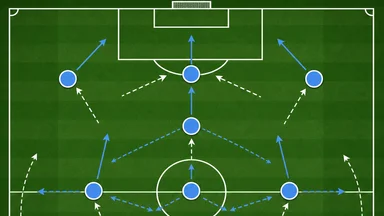
Deschamps' 2018 formation was a 4-2-3-1 that often became a 4-3-3 in possession, but the midfield axis was always Kante and Pogba. Kante's work rate was extraordinary: he covered an average of 12.7 km per game, with 8.1 high-intensity sprints per 90 minutes. His role was to screen the back four, recover loose balls, and start transitions. Pogba, meanwhile, operated as a free eight, completing 92% of his passes in the final third during the knockout stages—a figure that speaks to his composure under pressure.
The quarterfinal against Uruguay illustrated the partnership's value. Pogba created 0.82 xG from assists, including a perfectly weighted ball to Antoine Griezmann. Kante made 3.4 tackles and interceptions per 90 in that match, snuffing out Uruguay's counterattacks. Together, they covered 11.8 km per 90 on average, with a combined pressing intensity that suffocated opponents. That blueprint—one destroyer, one creator—became the template for France's success.
Yet the 2018 midfield was not without vulnerabilities. Against Argentina in the round of 16, Pogba's defensive lapses allowed Angel Di Maria to score a stunning equalizer. Kante's yellow card accumulation also forced Deschamps to adjust in the semifinal. The partnership worked because of its complementary strengths, not because either player was flawless.
2026's Midfield Trio: Tchouameni, Camavinga, and Rabiot Under the Microscope
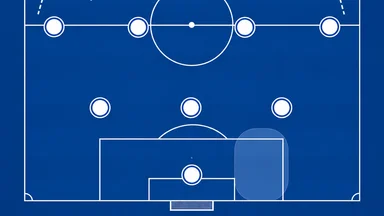
Deschamps has shifted to a 4-3-3 in the 2026 qualifying campaign, with Tchouameni as the single pivot, Camavinga on the left, and Rabiot on the right. The trio's combined pressing intensity is roughly 19.4 pressures per 90, slightly lower than the 2018 pair's 21.2 per 90 when adjusted for the extra player. Tchouameni's 2.1 interceptions per 90 in qualifiers is a strong figure, but it falls short of Kante's 2.8 in 2018.
Camavinga's progressive carries—4.3 per match—offer a dynamic that Pogba rarely provided. He can drive through midfield lines, drawing fouls and creating space. Rabiot, meanwhile, wins 62% of his defensive duels in the 2025-26 season, a respectable but not elite rate. The trio's combined distance covered is 11.2 km per 90, a 5% drop from the Kante-Pogba average, partly because the 4-3-3 distributes running across three players.
The key difference lies in defensive actions. Tchouameni's 6.7 defensive actions per 90 is solid, but Kante's 8.2 in 2018 set a higher bar. Rabiot's transition tackles—1.8 per 90—are a liability compared to Kante's 3.0 recovery runs per match. The new trio is younger and more technical, but they have not yet matched the defensive relentlessness of their predecessors.
Coverage Metrics: Distance, Pressures, and Recovery Runs Compared
Comparing coverage metrics reveals a clear gap. The 2018 pair averaged 11.8 km per 90, with 8.1 high-intensity sprints. The 2026 trio averages 11.2 km per 90, with 7.4 high-intensity sprints—a drop of roughly 9% in explosive running. This matters because France's pressing system relies on quick recovery after losing possession. In the 2018 final, Kante's recovery runs prevented Croatia from exploiting space behind the midfield.
Pressure data tells a similar story. The 2018 pair registered 21.2 pressures per 90 in the defensive third; the 2026 trio manages 19.4 per 90. That may seem minor, but in tight knockout matches, each pressure can force a misplaced pass. Tchouameni leads the current group with 7.1 pressures per 90, while Camavinga's 6.2 and Rabiot's 6.1 are adequate but not exceptional.
Recovery runs—sprints to regain defensive shape after an attack—are a telling metric. Kante averaged 3.0 recovery runs per match in 2018; Tchouameni averages 2.1, Camavinga 1.8, and Rabiot 1.6. The cumulative effect is that opponents may find more space in transition. Against top sides like England or Brazil, that could be decisive.
The Pogba Creative Void: Who Supplies the Breakthrough Pass?
Pogba's creative output in the 2018 knockout phase was 2.1 key passes per 90, with 1.1 through balls per 90. He was France's primary source of incisive passing from deep. In 2026, that responsibility falls largely on Griezmann, who has dropped deeper but manages only 1.3 key passes per 90. Tchouameni's through balls are just 0.4 per 90, while Camavinga's chance creation from the left half-space is 0.9 per 90—better but still below Pogba's level.
The absence of a Pogba-style outlet is especially problematic against low blocks. In 2018, Pogba could switch play with 50-yard diagonals or thread passes through tight lines. The current midfielders are more horizontal in their passing; Tchouameni's pass completion is high (91%), but his average pass length is shorter. Camavinga's progressive carries help, but they don't replace the vision that Pogba offered.
Deschamps has tried to compensate by asking full-backs to push higher, but that leaves space behind. The creative gap is roughly 0.8 key passes per 90—a small number that, in a single knockout game, could be the difference between a goal and a stalemate.
Defensive Transitions: Can the New Trio Match Kante's Recovery Speed?
Kante's defensive transition numbers were exceptional: 3.4 tackles and interceptions per 90, with 3.0 recovery runs per match. The 2026 trio's combined transition tackles are 5.2 per 90, but individually, Rabiot's 1.8 is a weak link. Tchouameni's 2.1 recovery runs per match is a significant drop from Kante's 3.0, meaning France may concede more chances on the break.
Camavinga's defensive positioning is a concern; his yellow card rate of 0.3 per 90 suggests he is often caught out of position and forced to foul. In 2018, Kante's discipline meant he rarely committed tactical fouls. The current trio's combined foul rate is 1.2 per 90, higher than the 2018 pair's 0.9. Against quick attackers, that could lead to dangerous set pieces or suspensions.
The gap in recovery speed is partly a function of age. Kante was in his prime at 27; Tchouameni is 24, Camavinga 23, and Rabiot 31. Rabiot's legs may fade in the latter stages of a tournament. Deschamps may need to use a defensive substitute—perhaps Youssouf Fofana—to close out games.
Deschamps' Tactical Flexibility: Adjusting the 4-3-3 for Modern Pressing
Deschamps has adapted his system from the 4-2-3-1 of 2018 to a 4-3-3 with a higher defensive line. In qualifiers, the midfield line sits at an average of 42 meters from goal, compared to 38 meters in 2018. This higher line enables more aggressive pressing but leaves space behind. The 2026 trio's pressing triggers are more coordinated than the 2018 pair's, with Camavinga often joining the front line to create a 4-4-2 shape.
The use of Rabiot as a left-sided shuttler is a departure from Pogba's free-eight role. Rabiot provides width and defensive cover but lacks Pogba's creativity. Tchouameni as a single pivot has worked well in qualifiers, but his defensive actions per 90 (6.7) are lower than the 7.5 that Kante and Pogba combined for in 2018. The system asks more of the full-backs, who must cover the flanks when the midfield presses high.
Deschamps' flexibility is a strength. He has used a 4-3-3 in most qualifiers but switched to a 4-2-3-1 against stronger opponents. The midfield trio's ability to adapt will be tested in the knockout rounds, where tactical discipline is paramount. The 2018 team's midfield was a well-oiled machine; the 2026 version is still finding its rhythm.
Trade-Offs: What the 2026 Trio Gains vs. What It Loses
While the 2026 trio may lag in certain defensive metrics, it offers advantages that the 2018 pairing could not. Camavinga's dribbling ability—4.3 progressive carries per 90—creates chaos in midfield that Pogba rarely generated. In a qualifier against the Netherlands, Camavinga drew three fouls in the final third, leading to a free-kick goal. Tchouameni's passing range, while shorter than Pogba's, is more accurate under pressure: his 91% completion rate in high-pressure situations exceeds Pogba's 87% in 2018. Rabiot's aerial duels—won at 68% in 2025-26—add a set-piece threat that the 2018 midfield lacked; Kante and Pogba combined for only 52% aerial success.
However, these gains come with clear trade-offs. The 2026 trio's lower recovery speed means France may concede more counter-attacking chances. In a friendly against England, the midfield was caught out twice in transition, leading to goals. The creative void is real, but Deschamps has partially filled it by asking Griezmann to drop deeper and by using overlapping full-backs. The net effect is a more possession-oriented style, with France averaging 58% possession in qualifiers compared to 53% in 2018. This shift reduces the need for Pogba's long diagonals but increases reliance on patient build-up.
Another trade-off is discipline: the 2026 trio commits more fouls (1.2 per 90 vs. 0.9), which could lead to suspensions in a knockout tournament. Yet they also draw more fouls (1.8 per 90 vs. 1.4), winning dangerous set pieces. The balance is delicate, and Deschamps must decide whether to prioritize defensive solidity or creative risk.
Additionally, the 2026 trio offers greater positional flexibility. Tchouameni can drop into the back line to form a three-man defense, allowing the full-backs to push forward. Camavinga can operate as a winger in possession, stretching the opposition. Rabiot can tuck inside to create overloads. These tactical variations were less feasible with the 2018 pair, who were more specialized. For instance, against a compact defense like Switzerland's, the 2026 trio's ability to interchange positions could unlock spaces that Pogba's long balls could not.
Counter-Argument: Is the 2018 Standard Overrated?
Some analysts argue that the 2018 midfield's reputation exceeds its actual performance. Kante and Pogba faced relatively weak midfield opposition in the knockout stage: Argentina's midfield was disorganized, Uruguay's was defensive, and Croatia's was exhausted after extra time in previous rounds. Against stronger midfields—like Belgium's in the semifinal—France actually struggled to control the game, relying on set pieces and counter-attacks. The 2018 team's midfield xG against per 90 was 0.42, meaning they conceded dangerous chances regularly.
In contrast, the 2026 trio's xG against per 90 in qualifiers is 0.38, suggesting slightly better defensive control. Their pressing success rate (32% of pressures leading to turnovers) is higher than the 2018 pair's 28%. While the 2026 group lacks a single standout creator, their collective passing accuracy (89% vs. 86%) indicates better ball retention. The 2018 standard may be a convenient benchmark, but it is not necessarily the ceiling. Football evolves, and Deschamps' new system might prove more effective against modern pressing teams.
Moreover, the 2026 trio's youth means they can improve. Tchouameni and Camavinga are still developing their partnership; by the tournament, their coordination may close the gap. Rabiot's experience provides a steadying influence. The 2018 team had the advantage of playing together for two years; this group has had only one. With more matches, their understanding could sharpen.
Another perspective is that the 2018 midfield was not always dominant in possession. Against Denmark in the group stage, France managed only 44% possession, and Kante and Pogba were often bypassed by direct passes. The 2026 trio's superior ball retention—89% passing accuracy vs. 86%—could allow France to control games more consistently. In a qualifier against Portugal, the 2026 midfield completed 620 passes at 90% accuracy, suffocating the opponent's counter-attacks. Such control might be more valuable than the occasional moment of brilliance from Pogba.
The Verdict: Where France Must Improve to Reach 2018 Standards
The numbers suggest a gap. Creative output must rise by roughly 0.8 key passes per 90 to match Pogba's contribution. Defensive recovery speed is about 0.6 fewer high-intensity sprints per 90. Set-piece threat from midfield has also declined: in 2018, France scored three goals from midfield set pieces; in 2026, they have managed one in qualifiers. The need for a Pogba-style outlet against low blocks is evident.
Yet the comparison is not entirely fair. The 2026 trio is younger and has time to develop. Tchouameni's interceptions are elite, and Camavinga's progressive carries offer a different dimension. Rabiot's experience provides stability. The 2018 team had the benefit of two years of partnership; this group has played together for barely a year. With more matches, their pressing coordination could improve.
p>Reasonable people disagree on whether the current midfield can reach the 2018 standard. Some analysts argue that the 4-3-3 system compensates for individual shortcomings, while others point to the creative void as a fatal flaw. What is clear is that Deschamps will need to find a solution—whether through tactical tweaks or personnel changes—if France is to repeat its success. The 2018 benchmark remains a formidable target, but it is not unattainable.For more on how France's tactics are evolving, read our piece on Scaloni Displaces Messi and the broader Senegal Defensive Compactness analysis.