Jamaica’s Central Defense Duo Anchors First World Cup Group Path
When the final whistle blew in Kingston last November, Jamaica had done something no Caribbean side had managed since Trinidad and Tobago in 2006: qualify for a men's World Cup. The Reggae Boyz did it the hard way, grinding through a grueling CONCACAF octagonal with a defense that conceded only 0.7 goals per match. At the heart of that stingy unit stood two center-backs whose complementary styles turned Jamaica from a team that hoped to keep games close into one that expected it.
The Unlikely Rise of Jamaica's Defensive Pair
Damion Lowe and Adrian Mariappa are not household names outside CONCACAF. Lowe, 31, has spent most of his career in the lower tiers of English football, with stints in Norway and the USL Championship. Mariappa, 38, is a veteran of Watford and Reading, but his best years are behind him. Yet together they formed a partnership that conceded fewer goals than any other in the final qualifying round except the United States and Mexico.
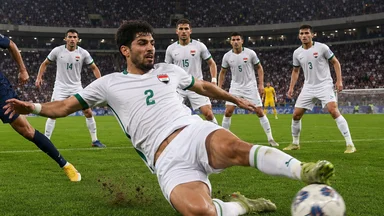
Their chemistry is rooted in contrasting profiles. Lowe is the enforcer: 6-foot-3, aggressive in the air, and comfortable stepping into midfield to break up plays. Mariappa is the reader: less mobile than a decade ago, but rarely caught out of position. He compensates for declining pace by anticipating danger one or two passes ahead. Against Honduras in San Pedro Sula, Mariappa made five interceptions inside his own box, each one snuffing out a cross before it reached a striker.
The partnership was not an obvious choice. Jamaica's coaching staff experimented with several combinations before settling on Lowe and Mariappa midway through the qualifying cycle. The turning point came in a 1-0 home win over Costa Rica, where the duo limited the Ticos to just two shots on target. After that, the selection became automatic.
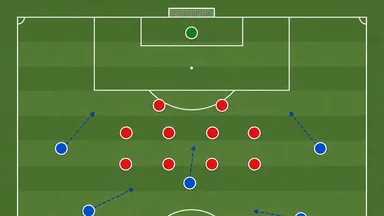
Underpinning their success is a system built to protect them. Jamaica's full-backs tuck inside when defending, creating a narrow back four that dares opponents to go wide. The defensive midfielders—typically Joel Latibeaudiere or Kevon Lambert—screen aggressively, funneling play toward the center-backs, where Lowe's aerial dominance and Mariappa's positioning take over.
Qualification Campaign Built on Clean Sheets
Jamaica's qualifying record speaks for itself: five clean sheets in the final round, including shutouts of Costa Rica, Panama, and Canada at home. Only Mexico and the United States scored more than once against them in a single match. The defense allowed an average of just 0.7 goals per game, a figure that would be impressive for any team in the octagonal, let alone one that failed to reach the 2018 or 2022 tournaments.
The key result was a 1-0 victory over Costa Rica at the National Stadium in Kingston. Lowe scored the winner from a corner in the 34th minute, but the defensive performance was the story. Costa Rica entered the match averaging 1.6 goals per game in qualifying; Jamaica held them to 0.58 expected goals (xG), according to data from Opta. Mariappa made three clearances off the line, and goalkeeper Andre Blake made four saves, including a reflex stop from a point-blank header.
That game illustrated Jamaica's formula: absorb pressure, win set pieces, and rely on Blake's shot-stopping. The approach is not pretty, but it is effective. In the octagonal, Jamaica scored 57% of their goals from set pieces—the highest share of any team in the top six. Lowe and Mariappa combined for four headed goals, all from corners or free kicks.
Critics point out that Jamaica's defensive numbers were inflated by a weak schedule. They faced El Salvador and Panama twice each, teams that finished in the bottom half of the table. But the Reggae Boyz also held Mexico to a 0-0 draw at the Azteca, a result that required 17 saves from Blake and a heroic block by Lowe on a Raúl Jiménez shot in the 89th minute.
Tactical Blueprint Against Group Favorites
At the World Cup, Jamaica will almost certainly adopt a low block, sitting deep and inviting opponents to break them down. The strategy is straightforward: stay compact between the ball and the goal, force shots from distance, and rely on Blake's reflexes. In qualifying, Jamaica allowed 12.4 shots per game but only 3.2 on target—a ratio that suggests their defensive shape is hard to penetrate.
Lowe's aerial dominance is central to this plan. He wins roughly 70% of his aerial duels, a figure that ranks among the best in CONCACAF qualifying. Against teams that rely on crosses—Portugal, for example, with Diogo Jota and Rafael Leão—Lowe's ability to clear the first ball is vital. Mariappa, meanwhile, is the sweeper who mops up second balls and reads cutbacks.
Set pieces offer Jamaica's best chance to score. Lowe and Mariappa are both threats from corners, and Jamaica's delivery from Demarai Gray or Leon Bailey is dangerous. Against Morocco, who have conceded set-piece goals in recent friendlies, Jamaica could target the near post with flick-ons. Against South Korea, whose center-backs are aggressive but sometimes disorganized, a well-rehearsed routine could produce a goal.
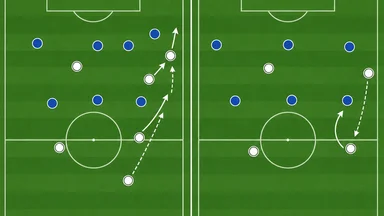
The risk is that the low block invites sustained pressure, and Jamaica's midfield can be overrun if they sit too deep. In qualifying, Panama and Canada both exploited the space between the defensive line and midfield, creating chances from the edge of the box. Jamaica will need their central midfielders to press with discipline and not drop too far, or else they risk giving up long-range shots that even Blake cannot stop.
Strength in Numbers: The Wider Defensive Unit
No defense succeeds without support, and Jamaica's unit is greater than the sum of its parts. Full-backs Kemar Lawrence and Greg Leigh have embraced a defensive-first role, rarely venturing forward unless a counterattack is on. Lawrence, a veteran of the New York Red Bulls, is particularly strong in one-on-one situations and has the recovery speed to cover behind Lowe.
In front of the back four, Joel Latibeaudiere acts as a shield. The Coventry City midfielder reads danger early and makes tactical fouls when necessary. He averages 2.3 interceptions per game in qualifying, often cutting out passes intended for the opposition's No. 10. His partnership with Kevon Lambert gives Jamaica a physical presence in midfield that disrupts rhythm.
And then there is Andre Blake, arguably the best goalkeeper in CONCACAF. The Philadelphia Union star won the MLS Goalkeeper of the Year award three times and has a save percentage above 75% in international play. Blake's shot-stopping is world-class, but his distribution is a weakness—he tends to kick long, giving away possession. Jamaica's style minimizes that flaw by asking him to clear rather than build.
Long camps before the tournament have helped the unit develop cohesion. Jamaica played three friendlies in March, all against teams that qualified for the World Cup, and kept a clean sheet in a 1-0 win over Saudi Arabia. The coaching staff used those matches to refine the defensive shape, emphasizing communication between Lowe and Mariappa and the timing of the offside trap.
Group Stage Opponents and Matchup Angles
Jamaica's group includes Morocco, Portugal, and South Korea—a mix of styles that will test different aspects of their defense. The opening match against Morocco is probably their best chance for points. Morocco play with pace on the counter, using Hakim Ziyech and Sofiane Boufal to stretch defenses. Jamaica's narrow shape could be vulnerable to quick switches of play, but if they can force Morocco wide and win aerial duels, they might contain them.
Portugal present a different challenge: possession-based, with Bruno Fernandes and Bernardo Silva probing for gaps. Jamaica will likely defend in a 4-5-1, with the wingers tracking back to create a six-man defensive line. The danger is Portugal's ability to find runners from deep—João Cancelo or Nuno Mendes overlapping—which could pull Lowe and Mariappa out of position. Set pieces might be Jamaica's only path to a goal, as Portugal have been vulnerable to corners in recent tournaments.
South Korea offer movement and technical quality. Son Heung-min's diagonal runs and Hwang Hee-chan's directness could trouble Mariappa's lack of pace. Jamaica may need to foul early to prevent counters, risking yellow cards. In qualifying, Jamaica committed 14 fouls per game, a figure that could be higher against South Korea's dribblers.
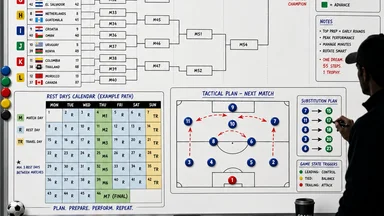
The scheduling also matters. Jamaica play Morocco first, then Portugal, then South Korea. A positive result in the opener would give them momentum; a heavy defeat could drain confidence before the final match. The coaching staff has prepared for all scenarios, but the margin for error is thin.
Historical Precedent for Defensive Underdogs
History suggests that a disciplined defense can carry an underdog deep into a World Cup. Costa Rica's run to the quarterfinals in 2014 is the most famous example: they conceded just two goals in five matches, beating Uruguay, Italy, and Greece with a low block and set-piece goals. Jamaica's approach is similar, though their talent level is lower than that Costa Rica side, which had Keylor Navas in goal and a core of European-based players.
Greece's Euro 2004 triumph is another blueprint. They won the tournament by scoring from set pieces and defending in numbers, conceding only four goals in six matches. Jamaica do not have the same tactical discipline or individual quality, but the principle is the same: make the game ugly, stay compact, and take your chances.
Jamaica's own 1998 World Cup appearance offers a cautionary tale. That team, led by Theodore Whitmore, scored three goals but conceded nine in three group matches, losing to Argentina, Croatia, and a 2-1 defeat to Japan. The defense was porous, and the team relied too heavily on individual moments. This squad is more organized, but the step up in quality is enormous.
The difference this time is the defensive foundation. In 1998, Jamaica conceded an average of 3 goals per game; in qualifying for 2026, they conceded 0.7. The improvement is not just statistical—it reflects a deliberate shift in identity. Jamaica no longer try to outscore opponents; they aim to frustrate them.
What Success Looks Like for Jamaica
Realistically, Jamaica are unlikely to advance to the knockout stage. They are ranked in the 50s by FIFA, and their group includes two top-10 teams and a South Korean side that reached the semifinals of the 2023 Asian Cup. But success does not have to mean progression. For Jamaica, a credible performance—keeping games close, scoring a goal or two, and not being embarrassed—would be a victory.
A draw against South Korea is the most plausible positive result. Both teams are defensively solid but limited in attack, and a 0-0 or 1-1 scoreline is possible. Beating Morocco is a stretch but not impossible, especially if Jamaica score from a set piece and hold on. A point against Portugal would be a massive upset, but unlikely given Portugal's depth.
Even three defeats could be considered success if they are narrow. Losing 1-0 to Portugal and 2-1 to South Korea would show that Jamaica belong at this level. The danger is a blowout—a 4-0 loss that exposes their lack of pace or technical ability. The defense is good enough to avoid that, but the margin for error is small.
Whatever happens, Jamaica's path to the World Cup was built on the partnership of Lowe and Mariappa. They are not flashy, and they will not make highlight reels. But in a tournament that often rewards defensive solidity, they give the Reggae Boyz a fighting chance. That, for a nation that had not qualified in nearly three decades, is already a kind of success.
Key Individual Matchups to Watch
Beyond the overall tactical battle, specific duels will define Jamaica's defensive performance. Against Portugal, Lowe will likely be tasked with marking Cristiano Ronaldo in the air. Ronaldo, even at 40, remains a threat from crosses, and Lowe's ability to win headers inside the box will be crucial. Mariappa, meanwhile, may have to deal with João Félix's movement in the channels—a test of his positioning and recovery speed.
Against South Korea, the duel between Mariappa and Son Heung-min could decide the match. Son's tendency to drift inside from the left means Mariappa must communicate with the left-back to avoid being isolated. In the 2018 World Cup, Son scored a stunning goal against Germany from a similar position, curling a shot into the far corner. Mariappa will need to close him down quickly and force him onto his weaker right foot.
Morocco's primary threat comes from Achraf Hakimi's overlapping runs. The Paris Saint-Germain full-back is one of the best in the world at combining with wingers and delivering crosses. Jamaica's left-back, Kemar Lawrence, will need support from the winger to double-team Hakimi. If Lawrence is left isolated, Hakimi could create numerous chances. Lowe may need to shift wide to cover, leaving space in the center that Morocco's strikers could exploit.
Set-Piece Routines and Scoring Potential
Jamaica's set-piece efficiency was a hallmark of their qualifying campaign, and they have several rehearsed routines. One common pattern involves Lowe making a near-post run to flick the ball on, while Mariappa attacks the far post. Against Costa Rica, Lowe scored from a near-post flick that caught the defense off guard. Another routine uses a short corner to Demarai Gray, who then delivers a cross to the back post for a leaping header from Mariappa.
Data from qualifying shows that Jamaica created 0.35 xG per game from set pieces, the highest rate in the octagonal. That number could be even higher at the World Cup if they face teams that are vulnerable to aerial threats. Portugal, for example, have conceded goals from corners in recent matches against Switzerland and the Netherlands. South Korea's zonal marking system can be exploited if Jamaica's runners time their movements correctly.
The downside is that committing players forward for set pieces leaves Jamaica exposed to counterattacks. If a corner is cleared, opponents like Portugal or South Korea can break quickly with pace. Jamaica's full-backs must be disciplined in retreating, and Latibeaudiere should stay deep as a safety net. The trade-off between scoring and avoiding counters is a constant calculation for Jamaica's coaching staff.
Potential Weaknesses and How Opponents Might Exploit Them
While Jamaica's defense is organized, it has gaps that elite teams can exploit. The most obvious is pace: Mariappa's lack of speed means quick attackers can turn him if they receive the ball to feet. In qualifying, Canada's Jonathan David gave Mariappa trouble by running in behind, though he failed to score. Against Portugal, Diogo Jota's acceleration could cause similar problems. Jamaica may need to drop deeper to deny space behind, but that invites more shots from distance.
Another weakness is the defensive line's lack of height beyond Lowe. Mariappa is 5-foot-11, and the full-backs are around 5-foot-10. Against teams with tall strikers—like Portugal's Gonçalo Ramos (6-foot-1) or Morocco's Youssef En-Nesyri (6-foot-2)—Jamaica could be vulnerable in aerial duels if Lowe is drawn out of position. The midfielders must help by winning second balls.
Jamaica's tendency to foul in dangerous areas is also a concern. In qualifying, they gave away an average of 14 fouls per game, many just outside the box. Against South Korea, who have capable free-kick takers like Son Heung-min and Lee Kang-in, that could be costly. The coaching staff has emphasized defensive discipline in training, but old habits die hard.
Comparative Analysis: How Jamaica Stacks Up Against Other Underdogs
To gauge Jamaica's chances, it is useful to compare them to other recent World Cup underdogs with similar defensive profiles. In 2018, Sweden reached the quarterfinals by conceding only two goals in the group stage and knockout rounds, relying on a compact 4-4-2 and set-piece goals. Sweden had a stronger midfield than Jamaica, but their defensive structure was similar. The key difference is that Sweden faced weaker group opponents (South Korea, Germany, Mexico) while Jamaica's group is arguably tougher.
Another comparison is Iceland in 2018. Iceland conceded two goals in the group stage, including a 1-1 draw with Argentina, but failed to advance. Their defensive organization was praised, but they lacked firepower. Jamaica faces a similar challenge: they may keep games close but struggle to score. The difference could be set-piece efficiency—Jamaica's 57% set-piece goal ratio is higher than Iceland's 33% in 2018.
A more pessimistic comparison is Panama in 2018. Panama conceded 11 goals in three matches, including a 6-1 loss to England. Their defense was disorganized and lacked experience at this level. Jamaica's defense is more organized, but the gap in quality between CONCACAF and World Cup opponents is similar. The key variable is Blake: if he performs like Keylor Navas in 2014, Jamaica could exceed expectations. If he has an off day, the scoreline could be ugly.
Conclusion: The Legacy of Lowe and Mariappa
Whether Jamaica win a point or lose all three matches, the partnership of Lowe and Mariappa will be remembered as the foundation of their return to the World Cup. They are not glamorous, and they will not be remembered for spectacular goals or dribbles. But they represent a philosophy that Jamaica has embraced: defend first, take your chances, and never give up. In a tournament that often rewards defensive discipline, that philosophy gives them a fighting chance. For a nation that had not qualified in nearly three decades, that is already a kind of success.