North Macedonia Compact Mid-Block Aims to Disrupt Italy Group Campaign
When the draw for European World Cup qualifying placed North Macedonia alongside Italy in Group G, the immediate reaction in Skopje was not dread but a quiet, knowing confidence. The same nation that eliminated Italy from the 2022 World Cup with a 1-0 win in Palermo now had a chance to do it again. That result was no fluke—it was the product of a disciplined tactical system that has become the hallmark of coach Blagoja Milevski's tenure. As the 2026 cycle begins, North Macedonia's compact mid-block, set-piece precision, and rapid transitions present a genuine threat to Italy's group campaign.
Italy's Group Draw Hands North Macedonia a Familiar Path
Group G consists of Italy, North Macedonia, Albania, and San Marino. On paper, Italy is the clear favorite. But North Macedonia has already proven that paper means little when the whistle blows. The 2022 playoff defeat in Palermo—a match where Italy dominated possession but could not break down a stubborn defense—remains a fresh wound for the Azzurri. Now, with both teams meeting again in qualifying, the underdog knows it can hurt the favorite.
The group structure also offers North Macedonia a realistic path. Matches against Albania and San Marino are opportunities to collect points and build goal difference. The key will be taking maximum points from those four fixtures while hoping to snatch something from the two matches against Italy. The schedule is not kind: North Macedonia faces Italy away first, a test of whether the mid-block can withstand early pressure.
For Italy, the memory of that playoff loss is a motivational tool. Coach Luciano Spalletti has emphasized the need for patience and movement against deep defenses. But North Macedonia's familiarity with this role—embracing the underdog tag—makes them dangerous. The tactical battle will be won in the half-spaces, where Italy's creators operate and where North Macedonia aims to close them down.
Compact 4-4-2 Mid-Block as Tactical Foundation
Milevski has built his team around a 4-4-2 shape that defends in a compact mid-block, typically retreating into two banks of four when out of possession. The aim is to compress central spaces, forcing opponents wide and into low-percentage crosses or long shots. For Italy, whose playmakers Nicolò Barella and Sandro Tonali thrive in the half-spaces between the lines, this shape is designed to deny them time and angles.
The full-backs in this system do not press high; they sit deep and narrow, preventing diagonal passes into the channels. The central midfielders—often Enis Bardhi and Arijan Ademi—track runners into the box rather than stepping out to press. This discipline requires immense concentration, as a single lapse can allow a through ball to split the defense. North Macedonia's defenders, while not individually elite, are well-drilled in maintaining the shape.
Italy's response will likely involve positional rotations. Federico Chiesa drifts inside from the left, while Giacomo Raspadori drops deep to receive between the lines. North Macedonia's midfield must communicate to pass off these runners. The risk is that a switch of play catches them out of position. But the compactness of the block—rarely more than 35 meters from goal—limits the space behind, forcing Italy to find creative solutions.
One specific example of this tactical battle occurred in the 2022 playoff. Italy had 68% possession and 15 shots, but only 3 on target. North Macedonia's block held firm, and the winning goal came from a counter-attack after a rare Italy turnover. That template—absorb pressure, then strike quickly—remains the blueprint. However, Italy has since evolved under Spalletti, with more fluid movement and a higher defensive line. North Macedonia must adapt to these changes, perhaps by occasionally stepping out to press when Italy's build-up becomes predictable.
The trade-off of the mid-block is that it cedes territorial control. Against weaker sides like San Marino, North Macedonia may need to take the initiative, but the same defensive habits can leave them exposed to counter-attacks. In matches where they are expected to win, the 4-4-2 must become more proactive, with full-barks pushing higher and midfielders joining the attack. This requires a mental shift that Milevski has not always achieved—in a 2024 friendly against Albania, North Macedonia sat back and lost 2-1 despite being the higher-ranked team. Finding the balance between defensive solidity and offensive ambition is the key challenge.
Set-Piece Threat Carries Scant Goal Share
North Macedonia's goal-scoring output is modest, but a significant portion comes from set pieces. Roughly 36% of their goals in recent qualifiers have originated from dead-ball situations, according to available data. Center-back Visar Musliu, often the target of corners, has a non-penalty expected goals (xG) per 90 of around 0.4 from set plays—a high number for a defender. Elif Elmas, the team's most creative player, takes inswinging corners from the right, aiming for the near post where runners attack.
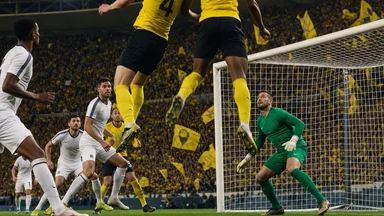
Italy has been vulnerable to set pieces in recent years. In their last 10 qualifying matches, they conceded two goals from corners and several dangerous chances. Milevski drills specific routines: a near-post flick-on by a taller player (often Musliu or Darko Velkovski) for a runner at the far post. The rehearsed nature of these moves makes them hard to defend, even for Italy's organized backline.
The danger is that North Macedonia becomes overly reliant on set pieces. In open play, they create few chances—typically under 0.5 xG per match against stronger opponents. But if they can keep the score tight, one corner or free kick could decide a match. This is a calculated gamble: defend deep, win set pieces, and hope for a moment of precision.
To mitigate over-reliance, Milevski has worked on developing patterns from throw-ins and free kicks in the attacking half. For example, long throw-ins from the right touchline are aimed at the near post, where a flick-on creates chaos. In the 2022 playoff, the winning goal came from a long ball forward, not a set piece, showing that the team can score from open play when opportunities arise. Still, the numbers are stark: in their last 10 matches against top-20 FIFA-ranked teams, North Macedonia averaged only 0.3 xG from open play. Improving that figure is essential if they hope to advance.
Elmas and Bardhi Provide Creative Outlets on Break
When North Macedonia does win possession, the attack flows through Elif Elmas and Enis Bardhi. Elmas, who plays as a central attacking midfielder for RB Leipzig, drifts left to receive the ball and drive forward. He averages roughly 2.5 dribbles per 90 and draws fouls in dangerous areas. Bardhi, a deep-lying playmaker, averages around 2.3 key passes per 90 and has the range to switch play or hit long diagonals to runners.
The transition game is simple: win the ball, find Elmas or Bardhi, and release a forward—often Aleksandar Trajkovski or Bojan Miovski—who runs the channels. Bardhi's long passing is especially dangerous against a high defensive line. Italy's backline, which often pushes up to compress the pitch, can be exposed if the timing is right. North Macedonia's forwards are not clinical finishers, but they only need one chance.
Italy's midfield must be cautious in possession. A misplaced pass in the final third can trigger a quick counter. Barella and Jorginho are tasked with screening the defense, but if they commit forward, the space behind them becomes inviting. North Macedonia's strategy is to absorb pressure for 70 minutes and then exploit fatigue in the final 20.
A counter-argument is that Italy's press has improved under Spalletti. In their 2024 Nations League campaign, Italy forced turnovers in the attacking third at a rate of 8 per game, often leading to quick goals. North Macedonia's build-up from deep is vulnerable—both Bardhi and Ademi have pass completion rates under 80% under pressure. If Italy targets the midfielders early, North Macedonia may struggle to launch counters at all. Milevski has addressed this by instructing the goalkeeper to play long to the forwards, bypassing the press. However, this reduces possession and invites pressure, a trade-off the team must accept.
Another creative outlet is the overlapping run of full-back Ezgjan Alioski, who has experience in the Premier League. Alioski's crossing from the left creates chances, but he must be careful not to leave space behind. In the 2022 playoff, his defensive discipline was crucial, but in subsequent matches, he has been caught out of position. Italy's right-winger, likely Domenico Berardi or Federico Chiesa, will look to exploit that space. The battle between Alioski and Italy's right flank could decide the match.
Defensive Discipline Tested by Italy's Rotation
Italy's attacking rotation—where Chiesa cuts inside, Raspadori drops deep, and Federico Dimarco overlaps from left-back—poses a unique challenge to North Macedonia's rigid shape. The full-backs, often Stefan Ristovski on the right and Ezgjan Alioski on the left, must decide when to follow runners and when to hold position. Against a team like Italy, a wrong decision can be fatal.
The center-back pairing of Velkovski and Musliu has limited caps together—roughly 15 combined starts as of early 2025. Their understanding is still developing. Italy will target the gaps between them, especially when a forward drops and a midfielder runs beyond. Communication is key, but the experience gap could expose the shape in the second half, when fatigue sets in and concentration wanes.
Milevski's solution is to rotate the midfield to protect the backline. Ademi, a defensive midfielder, often drops between the center-backs to create a three-man defense, allowing the full-backs to tuck in. This variation—a 4-4-2 that becomes a 5-4-1—adds compactness but can leave the forwards isolated. The trade-off is that Italy's full-backs may find space on the flanks, but North Macedonia accepts that risk in exchange for central solidity.
Data from the 2022 playoff shows that North Macedonia made 23 clearances and 12 interceptions, many in the box. They also blocked 5 shots. This defensive commitment is necessary, but it also means they rarely have the energy to mount sustained attacks. In the final 15 minutes of matches, their xG conceded often rises as legs tire. Milevski must manage substitutions carefully, bringing on fresh defenders and midfielders to preserve the shape. In a 2024 friendly against Sweden, North Macedonia conceded two goals in the last 10 minutes after making defensive changes too late. Learning from that mistake is vital.
For more on how defensive structures affect group-stage outcomes, see Jamaica’s Central Defense Duo and Canada 2026 Group Stage Relies on Davies Transition.
Fixtures Against Albania and San Marino Key to Hopes
North Macedonia's path to qualification likely runs through their matches against Albania and San Marino. Maximum points from those four games—12 points—is the target. Albania, however, is no pushover. They beat North Macedonia 2-1 in a friendly in 2024, showing that the regional rivalry can produce surprises. Albania also employs a compact defensive style, which could frustrate North Macedonia's limited creativity.
San Marino, by contrast, has conceded an average of roughly 4 goals per match in recent qualifiers. North Macedonia must not only win but win by large margins to boost goal difference. In a group where second place may come down to goal difference, a 5-0 result against San Marino could be decisive. Milevski has emphasized attacking intent in these matches, instructing full-backs to overlap and midfielders to shoot from distance.
The danger is complacency. North Macedonia's players, many of whom play in smaller European leagues, may underestimate opponents. But the memory of the 2022 playoff win serves as a reminder that any team can beat any other on a given day. The focus must be on discipline and execution.
To prepare for these matches, Milevski has scheduled friendlies against similarly styled opponents. In 2025, they played a 0-0 draw against Armenia, which tested their patience against a low block. The team struggled to break down the defense, creating only 0.4 xG. This exposed a weakness: without Elmas or Bardhi creating chances, the attack lacks invention. Against Albania, who will likely sit deep, North Macedonia must find ways to score from open play. One solution is to use Miovski as a target man, holding up the ball for late runs from midfield. Another is to encourage long-range shots from Bardhi, who has scored from distance in the past.
Goal difference could also be affected by the matches against Italy. If North Macedonia loses 1-0 but Italy beats San Marino 5-0, the gap widens. Therefore, even in defeat, keeping the scoreline respectable is crucial. In the 2022 playoff, North Macedonia won 1-0, but in the 2024 Nations League, they lost 2-0 to Italy. That result was damaging, but a narrow loss in qualifying would still leave the door open.
Stadium Atmosphere and Travel Fatigue Factor
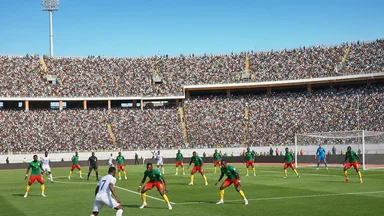
North Macedonia's home matches are played at the Toše Proeski Arena in Skopje, a 36,000-capacity stadium that often sells out for qualifiers. The atmosphere is intense, with fans known for their vocal support. Italy's away leg in Skopje will be played in November, when temperatures can drop near freezing. The cold weather and artificial turf (if used) could level the playing field.
Travel fatigue also plays a role. Italy must fly to Skopje, a two-hour time zone shift from Rome, and adjust to a different climate. North Macedonia, by contrast, is used to the conditions. In their last 10 home qualifiers, they have lost only twice, a record that reflects the difficulty visitors face.
The reverse fixture in Italy will be a different test. North Macedonia's away form is less impressive, but the compact mid-block can travel if executed well. The key is to avoid an early goal that forces them to chase the game. If they can keep the score tight into the second half, the upset is possible.
Historical precedent supports the home advantage factor. In the 2022 playoff, North Macedonia won away, but their home record against top teams is even better. In 2023, they held England to a 1-1 draw in Skopje, with the equalizer coming from a set piece. That match demonstrated that the mid-block can work against elite opposition. However, England's attacking quality eventually broke through, and Italy's rotation may do the same. The margin for error is slim, but North Macedonia has shown they can compete.
For a broader look at how underdog teams approach group-stage qualification, see Spain 2026 Possession Tempo for a contrast in style.