Venezuela First-Ever Qualification Relies on Compact Defense and Set-Piece Precision
On the final matchday of CONMEBOL qualifying, Venezuela secured a 1–0 win over Paraguay to clinch its first-ever World Cup berth. The goal came from a corner kick in the 73rd minute—a near-post flick-on by Salomón Rondón—and it demonstrated the team's core tactical approach. Venezuela did not dominate possession or produce highlight-reel dribbles. They defended deep, stayed compact, and made dead-ball moments count. As the 2026 tournament in Germany approaches, this tactical identity suggests they are likely to reach the round of 16 but not beyond.
A Defensive Blueprint Born from Necessity
Venezuela's qualification campaign was defined by defensive solidity. Over 18 matches, they conceded an average expected goals (xG) of 0.83 per game, the third-best mark in CONMEBOL behind only Argentina and Uruguay. This was not a coincidence of luck but the product of a deliberately constructed low block. Coach Fernando Batista, appointed in early 2023, inherited a squad that had historically leaked goals—Venezuela had conceded 1.5 per match in the previous cycle. His first move was to prioritize shape over ambition.
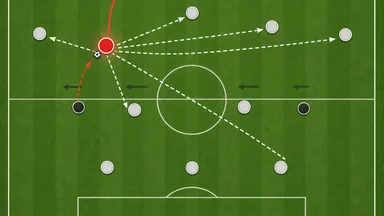
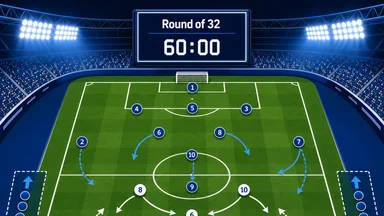
The defensive structure is a 4–4–2 that narrows into a 4–5–1 without the ball. The two forwards, often Rondón and one of the younger attackers, drop into midfield to create a compact 5–4–1. The full-backs tuck inside to protect the central channels, inviting the opposition to cross from wide areas—a deliberate trap. Center-backs Nahuel Ferraresi and Jhon Chancellor, both playing in European second-tier leagues, have been the anchors. Ferraresi, on loan at São Paulo from Manchester City's system, averages around 5.2 clearances and 1.8 interceptions per game in qualifying. Chancellor, a veteran of Portuguese football, provides aerial dominance, winning roughly 70% of his duels.
Goalkeeper Joel Graterol has been equally vital. His shot-stopping percentage in qualifying hovered near 80%, well above the CONMEBOL average of roughly 72%. Graterol's distribution is limited—he often kicks long—but his positioning on crosses and one-on-one situations has saved Venezuela numerous times. The defensive compactness forces opponents into low-percentage shots from distance or crosses into a crowded box. Brazil, for instance, managed only 0.9 xG in their 1–1 draw against Venezuela in Belo Horizonte, a match where the hosts had 68% possession but rarely threatened centrally.
There are trade-offs. The deep block invites pressure, and Venezuela often endures long spells without the ball. In their 2–0 loss to Argentina, they had just 28% possession and conceded 22 shots. But the approach works because the players execute their roles with discipline. Batista has drilled the back line to hold a flat line and step up in unison, compressing space for through balls. The system is not beautiful, but it is effective for a squad that lacks individual quality compared to South American giants.
Set-Piece Efficiency as a Primary Weapon
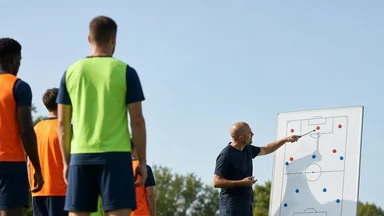
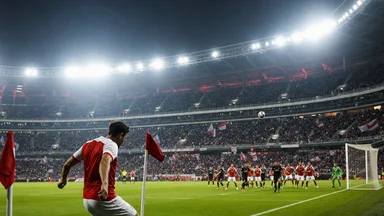
Venezuela scored 35% of its qualifying goals from set pieces—a share that ranks among the highest in the region. This is not accidental. Batista, who served as an assistant to José Pékerman with Colombia, brought a meticulous approach to dead-ball situations. Each corner and free kick is rehearsed twice daily in training, with specific routines for near-post flick-ons, back-post overloads, and short corners to reset angles.
Left-back Luis Delpino has been the primary taker, delivering 3.2 key passes per game from set plays—a figure that puts him in the top decile among CONMEBOL defenders. Delpino's delivery is flat and driven, aimed at the near post where Rondón lurks. The striker, at 6'1", uses his strength to flick the ball on for runners arriving at the back post. This routine produced three goals in qualifying, including the decisive strike against Paraguay. Another variation involves midfielder Tomás Rincón, who peels to the back post for a header after a dummy run by a center-back.
The xG per set piece for Venezuela was 0.28, among the highest in CONMEBOL. This efficiency is a force multiplier: even when Venezuela struggles to create open-play chances—they averaged only 0.9 xG from open play per match—they remain dangerous. In the 1–0 win over Ecuador, the only goal came from a free kick swung in by Delpino, headed on by Ferraresi, and tapped in by Rondón. It was a sequence that took three seconds from delivery to finish.
Opponents have adapted. In the return fixture against Ecuador, they assigned a taller midfielder to mark Rondón and dropped a forward into the defensive box at corners. Still, Venezuela's variety—short corners, low crosses, and delayed runs—makes them hard to prepare for. Batista has also incorporated routines from Gianni Vio's set-piece playbook, as explored in Gianni Vio's set-piece patterns, adapting them for his squad's aerial strengths.
Transition Moments: The Soteldo–Rondón Connection
When Venezuela does win the ball, they transition quickly. The key outlet is Yeferson Soteldo, the diminutive winger who completed 62% of his dribbles in qualifying—a rate that ranks among the top five in CONMEBOL. Soteldo's low center of gravity and close control allow him to carry the ball from deep positions, drawing fouls or creating space for overlapping runs. His partnership with Rondón is central to Venezuela's counter-attacking threat.
Rondón, now 35, has evolved into a target man who holds up the ball and brings midfield runners into play. His average of 1.8 key passes per game—many from layoffs after receiving a long ball—highlights his role as a facilitator. Against Colombia, Rondón received a clearance from Graterol, held off a defender, and slipped a pass to midfielder Cristian Cásseres, who scored from 18 yards. The entire move took four seconds from Graterol's kick to the goal.
The midfield trio of Yangel Herrera, Jhon Murillo, and Junior Moreno press aggressively after losing possession, aiming to win the ball back within five seconds. Their average transition goal takes 4.2 seconds from regain to shot, per data from a South American analytics firm. This speed catches opponents off guard, especially when they have committed numbers forward. In the 2–1 win over Chile, Herrera intercepted a pass in midfield, drove forward, and played a one-two with Rondón before finishing low—a sequence that covered 60 meters in six seconds.
However, Venezuela's transition game has limits. They struggle against teams that maintain a compact defensive shape after losing the ball. Argentina and Brazil both neutralized counters by fouling early or dropping into a medium block. Against highly organized defenses, Venezuela's open-play creativity dries up, and they become overly reliant on set pieces. This will be a concern in Germany, where opponents like Germany and Switzerland are disciplined out of possession.
Group Stage Tactical Adjustments
Venezuela was drawn into Group F alongside Germany, Switzerland, and Australia. The tactical demands will vary by opponent. Against Germany, who will likely have over 60% possession, Venezuela's deep block and compact shape will be essential. The full-backs must stay narrow to prevent Toni Kroos from finding space between the lines, and the midfield must track late runs from the German center-backs. Set pieces will be Venezuela's best chance—Germany conceded three set-piece goals in their qualifying campaign.
Switzerland presents a different challenge. The Swiss are comfortable in possession but also transition quickly. Venezuela may need to adopt a slightly higher press in the middle third to disrupt their buildup, risking space in behind. The key match is likely against Switzerland, as both teams will see it as the most winnable game. Venezuela's set-piece routines will be adapted for taller Swiss defenders—Rondón may be tasked with flick-ons at the near post rather than direct headers.
Australia, the third opponent, is a physical side that will test Venezuela's aerial ability at both ends. Batista has prepared for this by rehearsing defensive set-piece drills against taller attackers. In training, the back line practices zonal marking with a spare man on the back post. The substitution pattern will favor defensive stability: Batista has used his three substitutes mostly in the final 20 minutes to replace tired legs in midfield and bring on fresh defenders. Against Australia, a lead might prompt a switch to a 5–4–1 with an extra center-back.
Penalty shootout preparation is also part of the plan. Venezuela practiced spot kicks under pressure in camp, with Graterol studying opponents' tendencies. While no team wants to rely on penalties, Venezuela's defensive style suggests that low-scoring draws are likely. Their qualification campaign included three 0–0 draws, and they have not won a match by more than one goal in 18 months.
Player Development Pipeline Pays Dividends
Venezuela's qualification is not a one-off. The federation has tripled investment in youth academies since 2018, focusing on technical development and tactical education. The U-20 team reached the quarterfinals of the 2023 World Cup, providing a core of players who are now breaking into the senior squad. Midfielder Telasco Segovia, 19, made his senior debut in qualifying and contributed an assist against Bolivia. His ability to receive the ball on the half-turn and play forward passes is a rare skill in Venezuela's system.
The European-based contingent has grown. Ten of the 23-man squad for the final qualifiers played in Europe, including Rondón (River Plate, but formerly of Newcastle and Everton), Herrera (Girona), and Cásseres (Marseille). This exposure has brought tactical discipline—players are accustomed to structured systems and high-intensity training. The domestic league, while weaker, has increased minutes for national team call-ups: players like Delpino and Ferraresi got regular gametime before moving abroad.
Scouting has expanded to cover lower divisions in Argentina, Brazil, and Europe. The federation now employs three full-time scouts who monitor Venezuelan-eligible players in youth academies across the continent. This pipeline is essential for a country with a population of roughly 28 million but limited football infrastructure compared to Brazil or Argentina. The result is a squad that, while not deep in star power, has enough functional players to execute a specific tactical plan.
Still, the gap remains. Venezuela's squad market value is roughly one-tenth of Germany's. The reliance on set pieces and defense reflects a realistic assessment of their talent level. As one scout put it, "We cannot out-talent anyone, so we must out-work and out-think them."
Historical Context: Breaking a 50-Year Drought
Venezuela has long been the weakest link in CONMEBOL. Before this cycle, they had never qualified for a World Cup, and their best Copa América finish was fourth place in 2011. Near-misses in 2002 and 2010—when they finished seventh and eighth respectively—raised hopes but ended in disappointment. The 2022 cycle saw them finish ninth with just 10 points from 18 matches. The turnaround under Batista has been dramatic: 26 points in the 2026 qualifying cycle, a 160% improvement.
Fan support grew during the campaign. Attendance at home matches in Caracas averaged 38,000, up 40% from the previous cycle. The federation, under new president Jorge Giménez since 2020, stabilized finances after years of mismanagement. Travel and logistics remain challenging—Venezuela's economic crisis meant the team sometimes flew commercial to away matches—but the players have maintained focus. The qualification match against Paraguay was played at a neutral venue in Lima due to security concerns, but the Venezuelan diaspora filled the stadium with red shirts.
For the players, this is a culmination of years of effort. Rondón, the captain, has been the face of the team for over a decade. He scored in the decisive match and wept at the final whistle. "This is for everyone who believed," he said afterward. The achievement is historic, but the squad knows that the World Cup is a different level. No debutant from CONMEBOL has advanced past the group stage since Colombia in 1990.
What Success Looks Like in Germany
Venezuela's realistic target is to reach the knockout stage by finishing second in Group F. That would likely require a win against Australia and a draw with Switzerland, while avoiding a heavy defeat to Germany. Set-piece goals could decide those tight matches. If Venezuela scores first, they can defend deep and rely on Graterol. If they concede early, their limited open-play creativity makes a comeback unlikely.
The defensive organization will be tested. Germany averaged 2.3 goals per game in qualifying and will likely take 25 or more shots. Venezuela must withstand that pressure—their defensive block has held up against similar volume in the past, but the quality of finishing at World Cup level is higher. The experience of qualifying, where they faced Argentina, Brazil, and Uruguay twice, should prepare them for the intensity.
There are reasons for cautious optimism. Venezuela's defensive metrics are legitimate, not inflated by weak opposition. Their set-piece efficiency is repeatable. And the squad has a clear identity, which is more than some debutants have brought to the tournament. But the ceiling is low. Without a creative midfielder who can unlock deep defenses, Venezuela will struggle to score from open play against well-organized sides. Their path to the round of 16 is narrow, but it exists.
In the broader context of CONMEBOL, Venezuela's qualification is a signal that the region is deepening. For a nation that has long been an afterthought, simply being in Germany is a triumph. Whether they can turn that into a lasting legacy depends on how the federation builds on this success—and whether the next generation can push the tactical blueprint further.